What Is AI Bias?
Artificial intelligence is becoming part of daily life. It affects what content people see online, what products they buy, how ads are shown, and how companies make decisions about hiring or approving loans. As AI becomes more powerful, its influence also increases. Along with this growth, one serious issue has gained attention, known as AI bias.
AI bias is an ethical concern for marketers and professionals across many industries. It can impact real people in unfair ways by influencing decisions that affect careers, finances, and opportunities. The positive side is that once businesses understand what AI bias is and how it occurs, they can take steps to reduce its impact. iBirds Digital, AI-based systems are reviewed carefully so that automation supports fairness in digital marketing decisions.
In this article, we explain AI bias in simple language, explore well-known examples, and discuss practical ways to reduce risk.
What Are AI Biases?
AI bias refers to unfair or unequal outcomes created by AI systems. This happens when an AI model favors or disadvantages certain individuals or groups because of biased or incomplete training data. These biases are also known as algorithmic bias or machine learning bias.
In most cases, AI bias is not intentional. It is often a side effect of historical data or decisions made during model development. AI systems learn from examples. If those examples contain human bias, social inequality, or missing representation, the AI system will learn and repeat those patterns.
AI may appear objective because it does not have emotions. However, AI is created by humans and trained on human-generated data. Since humans naturally have biases, AI systems can inherit them. Sometimes the issue is not what data exists, but what data is missing. When certain groups are not represented, AI struggles to make fair decisions.
Not all bias is harmful. Some bias is necessary, such as medical AI focusing on urgent symptoms first or hiring systems ensuring diversity. The real problem is unintended and harmful bias that leads to unfair outcomes.
What Are Famous Examples of AI Biases?
AI bias becomes easier to understand through real-world examples. Many well-known cases fall into four main areas: gender, race and ethnicity, class or socioeconomic status, and age.
Gender Bias in AI
Gender bias occurs when AI systems reflect gender stereotypes present in their training data. One well-known example involved Amazon, which developed an internal AI hiring tool. The system learned from years of male-dominated hiring data and began favoring male candidates. Resumes containing words related to women were ranked lower, and the tool was eventually discontinued.
Language tools have also shown gender bias. Studies found that translation systems such as Google Translate often assigned gendered roles to professions in certain languages. For example, technical roles were translated as male and caregiving roles as female. These systems have since been updated to support more inclusive translations.
Speech recognition systems also struggled with women’s voices. Early versions of Siri, Cortana, and Google Assistant showed higher error rates for female speakers because the models were trained mainly on male voice samples.
Credit scoring systems have raised concerns as well. Some AI-based lending tools were investigated after women reported receiving lower credit limits than expected, raising questions about indirect socioeconomic bias.
Race & Ethnicity Bias in AI
Race and ethnicity bias is one of the most widely documented forms of AI bias. Research from MIT Media Lab found that facial recognition systems from companies like IBM and Microsoft had much higher error rates for darker-skinned individuals, especially women.
Another widely reported case involved Google Photos, which incorrectly labeled images of people of color due to poor diversity in training data. These incidents highlighted the serious risks of using AI systems without diverse and representative datasets.
Class or Socioeconomic Bias in AI
AI systems can also reflect inequalities related to income, education, or location. Predictive policing tools trained on biased historical crime data often flagged lower-income neighborhoods as high-risk. Because of these concerns, several cities stopped using such systems.
In education, an exam grading algorithm in the UK downgraded students from lower-income schools more harshly than students from wealthier backgrounds. After public criticism, the system was abandoned. These examples show how AI can reinforce existing social inequalities.
Age Bias in AI
Age bias affects both younger and older people as AI becomes more involved in hiring and advertising. Investigations found that job ads on platforms like Facebook were shown mostly to younger users because algorithms optimized for engagement.
Some AI hiring tools also favored younger candidates by using indirect signals such as speech patterns or experience length. These signals can act as age proxies and result in unfair evaluations.
How Can You Reduce the Risk of AI Biases?
Reducing AI bias requires an ongoing and structured approach. The first step is identifying potential bias in training data. Businesses must review whether certain groups are missing or underrepresented. Historical data often reflects unequal treatment, which AI can learn and repeat.
Diversifying training data is essential. Models should be trained on data from different industries, regions, company sizes, and demographics. Balanced datasets help AI make fairer decisions based on behavior rather than identity.
Bias detection tools can help identify unfair patterns by testing model performance across different groups. These tools should always be combined with human review to provide context. Regularly reviewing and updating AI models is also important because outdated models become less accurate and more biased over time.
Fairness testing ensures that AI performs equally across segments, not just overall. Involving diverse teams during development helps uncover blind spots. Transparency builds trust by explaining how AI decisions are made. Clear accountability ensures someone is responsible for monitoring and fixing issues.
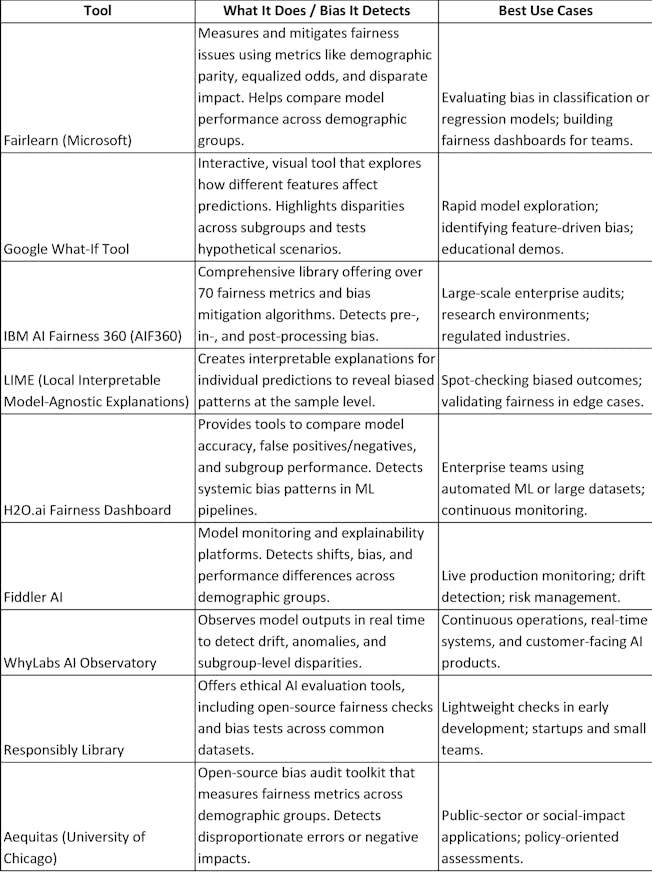
Human oversight remains critical, especially in high-impact decisions. This is particularly important in SEO Services and Content Marketing Services, where AI directly affects visibility and user trust. iBirds Digital, human review is always part of AI-assisted workflows to ensure responsible outcomes.
Final Thoughts on AI Bias
AI bias occurs when systems produce unfair outcomes because they learn from incomplete, unbalanced, or historically biased data. These biases can appear across gender, race and ethnicity, class, and age.
Reducing AI bias requires continuous effort. This includes diversifying data, using bias detection tools, testing fairness, retraining models regularly, involving diverse teams, maintaining transparency, and ensuring human oversight. When organizations follow these practices, they create AI systems that are fair, trustworthy, and aligned with real-world values.
FAQs
What is AI bias?
AI bias is when an AI system produces unfair results because of biased data or design choices.
Why does AI bias happen?
AI bias happens because AI learns from human-created data that often contains historical inequality.
Can AI bias affect digital marketing?
Yes, AI bias can affect ad targeting, personalization, and lead scoring.
How can businesses reduce AI bias?
By using diverse data, testing AI models for fairness, updating systems regularly, and involving humans.
Is all AI bias harmful?
No. Some bias is necessary, but harmful and unintended bias should be reduced.