
Running a website without an SEO audit is similar to running a business without checking performance reports. You may be publishing content regularly, improving pages, and adding products or services, but if hidden SEO issues exist, your website may still struggle to rank on search engines.
Many businesses invest time and money into digital marketing but still fail to attract enough organic traffic. The reason is often simple — technical SEO problems, outdated content, broken links, poor mobile usability, indexing issues, or weak keyword optimization silently affect performance. Without regular monitoring, even a well-designed website can gradually lose visibility in search results.
Search engines continue to evolve, and SEO requirements are no longer limited to keywords and backlinks. Search engines now prioritize page experience, content quality, helpful information, mobile responsiveness, Core Web Vitals, structured data, and user intent. This makes regular website analysis more important than before.
That is exactly where an SEO audit for business becomes valuable.
An SEO audit helps identify hidden website issues, technical weaknesses, content gaps, and opportunities for growth. It provides a clear picture of how your website performs from both a search engine and user perspective. Whether you own a startup, an eCommerce business, or a service-based company, conducting regular audits can help improve rankings, website traffic, and conversion opportunities.
In this guide, we’ll explain what an SEO audit is, different types of SEO audits, key business benefits, how to perform an SEO audit step-by-step, and what improvements you can expect after completing one.
What is an SEO Audit?
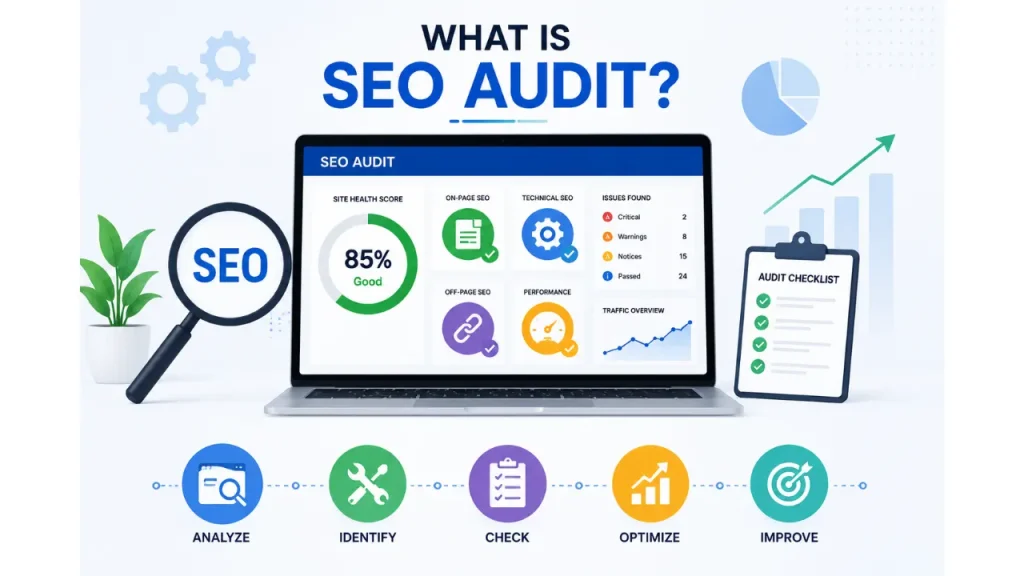
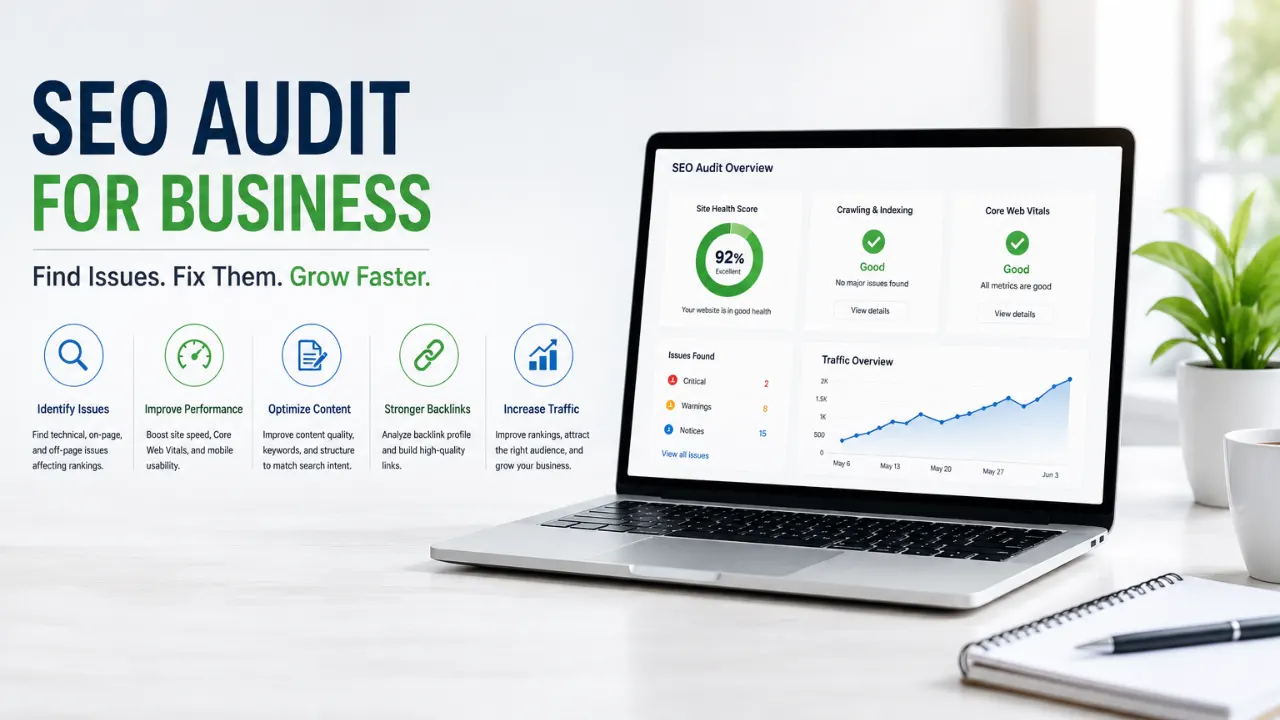
An SEO audit is a detailed analysis of your website that helps identify issues affecting search engine performance, user experience, and organic visibility. It reviews technical SEO, on-page elements, off-page factors, website structure, speed, mobile usability, content quality, and indexing performance to determine what is helping or hurting rankings.
Think of an SEO audit as a complete health check for your website.
Just like businesses regularly review finances or operational performance, websites also require regular evaluation to remain competitive in search results. A website may look visually attractive, but hidden SEO issues such as broken pages, duplicate content, poor loading speed, crawl errors, or weak internal linking can prevent strong rankings.
A modern website SEO audit goes beyond checking keywords. Search engines now evaluate whether pages solve user problems, load quickly across devices, and provide trustworthy, high-quality information. AI-powered search experiences and changing ranking systems have made website optimization even more important for businesses that want consistent visibility.
A proper audit helps businesses:
- Identify technical SEO errors
- Improve website speed and mobile performance
- Fix indexing and crawlability issues
- Strengthen content quality and keyword targeting
- Improve internal linking structure
- Increase organic traffic opportunities
- Create a better user experience
For businesses investing in long-term growth, combining regular website audits with professional SEO Services can help maintain stronger visibility and improve overall digital performance.
Without regular SEO auditing, websites often lose rankings slowly without business owners realizing what is causing the drop.
Types of SEO Audit
A successful SEO audit for business involves reviewing multiple areas of a website instead of focusing on only one factor. Search engines evaluate websites through hundreds of signals, which means businesses need a complete understanding of how their site performs technically, structurally, and content-wise.
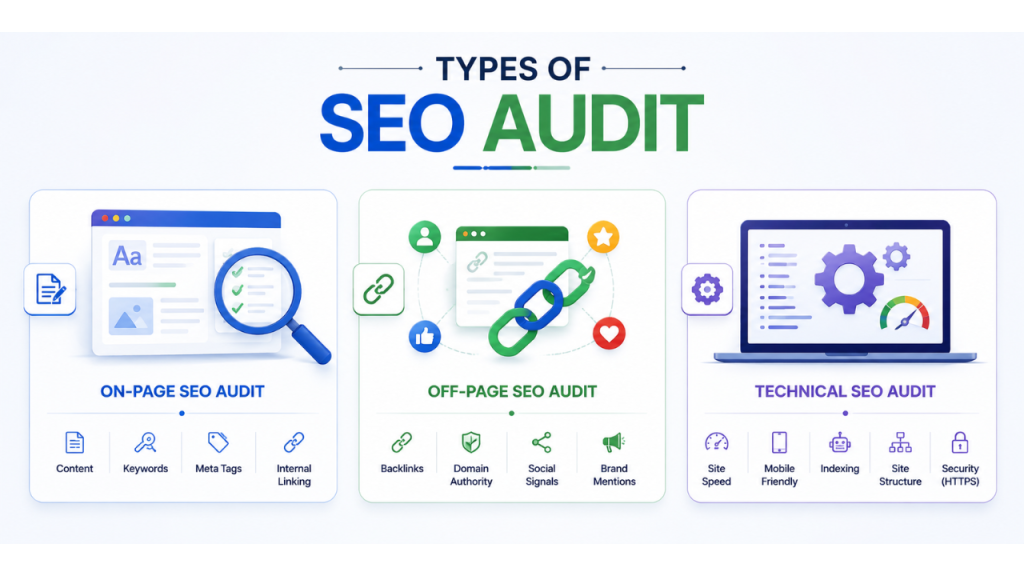
While SEO strategies continue to evolve, most website audits still fall into three major categories: On-Page SEO Audit, Off-Page SEO Audit, and Technical SEO Audit.
1. On-Page SEO Audit
An On-Page SEO Audit focuses on elements directly visible on your website pages. This includes reviewing content quality, keyword targeting, headings, titles, meta descriptions, image optimization, internal links, and page structure.
The purpose of this audit is to ensure that every webpage is optimized for both search engines and users.
For example, outdated content, weak keyword placement, missing metadata, duplicate headings, poor readability, or unoptimized images can reduce a page’s ability to rank. A strong on-page audit helps businesses identify content gaps and improve pages that no longer generate traffic.
Modern search engines also evaluate content helpfulness and relevance. This means pages should answer real user questions while naturally targeting long-tail keywords and search intent.
An effective on-page audit typically checks:
- Page titles and meta descriptions
- Keyword placement and content quality
- Heading structure (H1, H2, H3)
- Internal linking opportunities
- Image optimization and alt text
- Content freshness and readability
- Duplicate content issues
Businesses regularly investing in Content Marketing Services often perform on-page audits to maintain consistent rankings and improve organic traffic performance.
2. Off-Page SEO Audit
An Off-Page SEO Audit focuses on factors outside your website that influence rankings and authority. This includes backlinks, referring domains, brand mentions, broken backlinks, spam links, and overall website trust signals.
Backlinks continue to play an important role in SEO, but search engines now prioritize quality over quantity. A few high-authority backlinks often provide more value than hundreds of low-quality links.
An off-page SEO audit helps businesses identify:
- Toxic or spammy backlinks
- Broken inbound links
- Link-building opportunities
- Competitor backlink strategies
- Brand authority signals
- Guest posting opportunities
Strong off-page SEO also improves credibility and domain authority, helping websites compete more effectively in competitive industries.
3. Technical SEO Audit
A Technical SEO Audit reviews the technical foundation of a website to ensure search engines can crawl, index, and understand webpages correctly.
Without technical optimization, even strong content may struggle to rank.
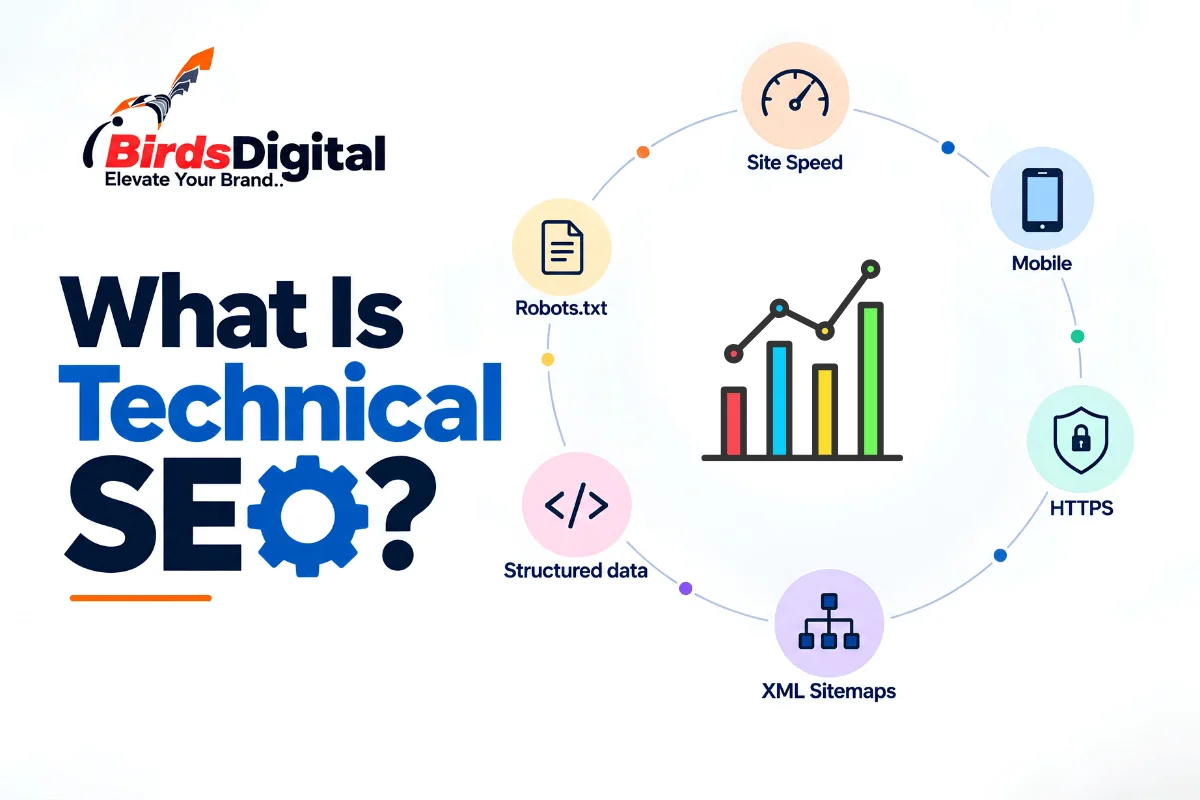
Modern SEO audits now include advanced performance checks such as Core Web Vitals, mobile responsiveness, structured data, crawlability, site architecture, indexing health, XML sitemaps, HTTPS security, and page loading performance.
Technical audits usually analyze:
- Website speed and performance
- Mobile-friendliness
- Crawl errors and indexing issues
- XML sitemap functionality
- Robots.txt optimization
- Structured data and schema markup
- Broken pages and redirect issues
- Core Web Vitals performance
For businesses with large websites, technical audits are especially important because hidden SEO problems often affect rankings without visible warning signs.
Benefits of an SEO Audit
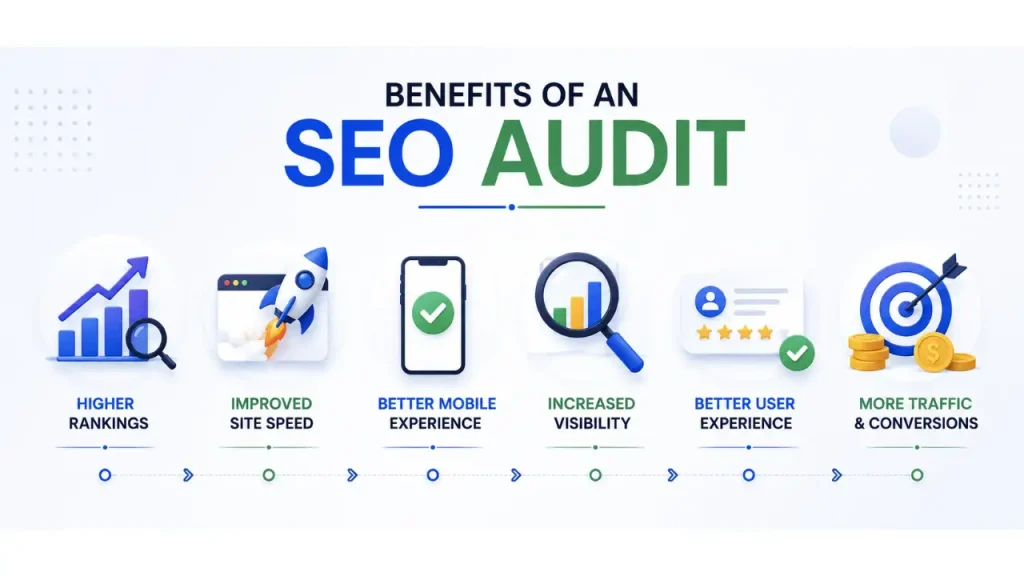
The importance of an SEO audit for business growth goes far beyond identifying website errors. A proper audit helps businesses understand why pages are underperforming, where traffic opportunities exist, and what improvements can generate better search visibility.
Here are some major benefits of conducting a regular website SEO audit:
Improves Website Health
SEO audits continuously monitor the condition of your website and highlight areas requiring attention. From technical issues to outdated content, audits help businesses fix problems before they affect rankings.
Improves Search Engine Visibility
Search engines prefer websites that are technically optimized, fast, mobile-friendly, and relevant to user intent. Regular SEO audits help improve rankings and increase organic traffic opportunities.
Helps Websites Stay Updated With Algorithm Changes
Google updates its ranking systems regularly. SEO audits help websites remain aligned with changing search engine expectations, including content quality signals, page experience, and indexing standards.
Improves User Experience
User experience directly impacts SEO performance. Slow loading pages, confusing navigation, broken links, and poor mobile usability reduce engagement. Audits help improve site usability and visitor satisfaction.
Helps Analyze Competitor Strategies
An SEO audit also helps businesses understand competitor performance, keyword gaps, backlink opportunities, and content strategies that may improve market positioning.
Supports Better Conversion Opportunities
Traffic alone does not grow a business. SEO audits help identify landing page weaknesses, content gaps, and usability issues that may affect lead generation or sales.
Businesses combining SEO audits with professional Digital Marketing Services often see stronger long-term performance because optimization efforts become more data-driven and strategic.
How to Do an SEO Audit (Updated 2026)
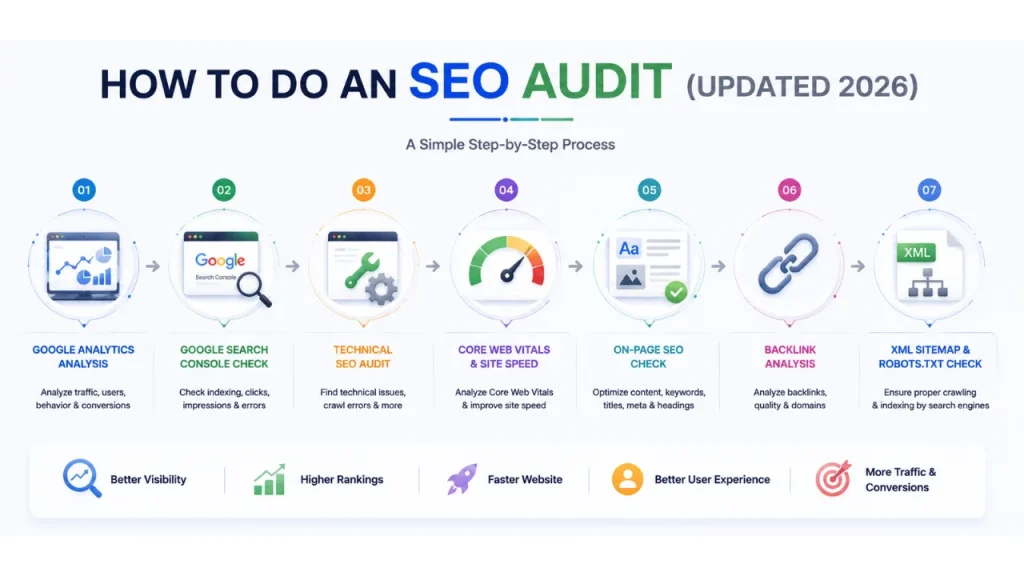
An SEO audit may sound technical, but following the right process makes website analysis much easier. Modern SEO audits are no longer limited to checking keywords and backlinks. Search engines now evaluate website performance, content helpfulness, mobile experience, user intent, technical health, and page quality.
Here are the most effective steps businesses should follow while conducting an SEO audit in 2026:
1. Set Up Google Analytics and Google Search Console
The first step in any website SEO audit is reviewing performance data.
Google Analytics 4 (GA4) helps businesses understand visitor behavior, traffic sources, user engagement, and conversion performance. Meanwhile, Google Search Console provides valuable insights into search visibility, indexing issues, keyword performance, crawl errors, and page impressions.
These tools help answer important questions such as:
- Which pages drive the highest traffic?
- Which pages are losing rankings?
- Are there indexing problems?
- What keywords are generating impressions?
- Which pages have poor engagement?
Without real performance data, improving SEO becomes difficult.
2. Review Technical SEO Health
Technical SEO remains one of the most important parts of a successful audit.
Search engines must be able to crawl, understand, and index your website correctly. Even high-quality content may struggle to rank if technical issues exist behind the scenes.
During a technical SEO audit, businesses should check:
- Website crawlability and indexing
- Broken pages and redirect chains
- XML sitemap performance
- Robots.txt setup
- HTTPS security
- Duplicate content issues
- Canonical tags
- Structured data and schema markup
A proper technical audit helps search engines understand website content more efficiently.
3. Analyze Core Web Vitals and Website Speed
Website speed continues to play a major role in SEO rankings and user experience.
Search engines prioritize websites that load quickly and perform smoothly across devices. Slow-loading pages often increase bounce rates and reduce conversions.
Important performance metrics now include:
- Largest Contentful Paint (LCP)
- Interaction to Next Paint (INP)
- Cumulative Layout Shift (CLS)
Businesses should also optimize:
- Large image files
- Unused CSS and JavaScript
- Slow server response time
- Heavy plugins and scripts
Fast websites generally provide better engagement and stronger SEO performance.
4. Audit On-Page SEO Elements
Once technical performance is reviewed, businesses should analyze page-level optimization.
This includes reviewing:
- SEO titles and meta descriptions
- Heading structure (H1, H2, H3)
- Keyword targeting
- Internal linking
- Content quality and freshness
- Image optimization
- Duplicate content
Modern SEO also focuses heavily on search intent optimization. Content should answer user questions clearly while naturally targeting relevant long-tail keywords.
Businesses publishing blogs regularly often improve performance through consistent content updates and better optimization practices. Combining audits with professional SEO Services can help identify content gaps faster and improve organic growth opportunities.
5. Check Mobile Friendliness
Mobile-first indexing is now standard.
Since most users browse websites through smartphones, businesses must ensure pages load properly across different screen sizes. Poor mobile usability negatively affects rankings and engagement.
Important mobile checks include:
- Responsive website design
- Fast loading speed
- Readable text formatting
- Clickable navigation
- Proper image scaling
A poor mobile experience often leads to higher abandonment rates.
6. Review Backlinks and Off-Page SEO
A complete SEO audit also includes reviewing backlink quality.
Businesses should monitor:
- Toxic backlinks
- Broken backlinks
- Referring domains
- Competitor backlinks
- Guest posting opportunities
High-quality backlinks still improve authority and trust signals, helping websites compete in search rankings.
7. Submit and Update XML Sitemap
Once website improvements are complete, businesses should update and submit their XML sitemap through Google Search Console.
This helps search engines crawl and index important pages more efficiently, improving website visibility.
What to Expect After an SEO Audit?
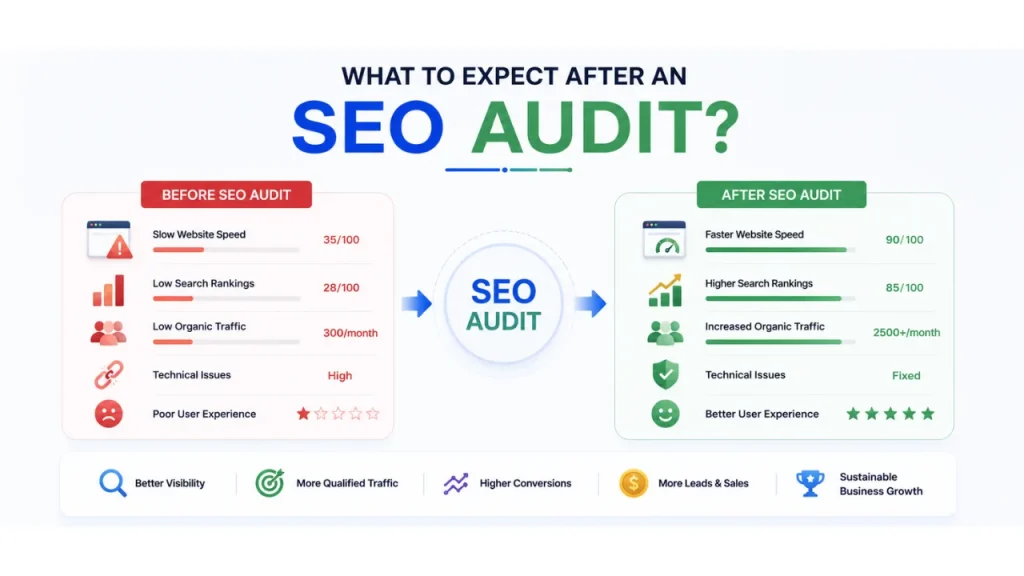
An SEO audit provides a roadmap for website improvement, but results do not happen instantly. Search engines require time to recrawl and process website changes.
Depending on website size, competition, and technical complexity, noticeable improvements may take several weeks to a few months.
Here are some common improvements businesses can expect after a proper SEO audit:
Better Site Speed and Mobile Experience
After identifying technical issues, websites usually become faster and more responsive.
Optimizing images, improving scripts, reducing unnecessary code, and enhancing mobile usability often improve user engagement significantly.
Stronger Internal Linking Structure
SEO audits frequently uncover opportunities to improve website navigation and page connections.
Better internal linking helps users find useful content while helping search engines understand website structure more effectively.
Improved Content Quality
Many businesses discover outdated or underperforming pages during an audit.
Updating content with fresh information, stronger keyword targeting, helpful explanations, and original visuals often improves search performance.
Better Search Visibility
Fixing crawl issues, indexing problems, technical errors, and content gaps usually improves overall visibility in search engines.
Over time, businesses may notice improvements in:
- Organic traffic
- Keyword rankings
- Page impressions
- User engagement
- Lead generation opportunities
Better Long-Term SEO Strategy
SEO audits also help businesses make smarter decisions by identifying what is working and what needs improvement.
Businesses investing consistently in Social Media Marketing Services often benefit from stronger organic visibility because their optimization strategy becomes more structured and performance-focused.
The Key Takeaway
An SEO audit for business is no longer optional for companies wanting consistent online growth. Search engines continue changing ranking systems, user expectations keep evolving, and website competition increases every year.
Regular website audits help businesses identify hidden SEO issues before they affect traffic, rankings, or conversions. From technical optimization to content improvements, audits provide clear direction for maintaining better search visibility.
For most businesses, conducting an SEO audit at least once or twice a year helps maintain stronger performance and keeps websites aligned with current search engine expectations.
The earlier SEO problems are identified, the easier they become to fix.
Frequently Asked Questions
1. What is an SEO audit?
An SEO audit is a complete website review that analyzes technical SEO, content quality, page performance, backlinks, and user experience to identify issues affecting rankings.
2. Why is an SEO audit important for businesses?
SEO audits help businesses identify website errors, improve search visibility, enhance user experience, and strengthen long-term organic growth.
3. What are the main types of SEO audits?
The three major types are On-Page SEO Audit, Off-Page SEO Audit, and Technical SEO Audit.
4. How often should a business perform an SEO audit?
Businesses should ideally conduct an SEO audit every 6 to 12 months or whenever major website changes occur.
5. How long does an SEO audit take?
Depending on website size and complexity, an SEO audit may take anywhere from a few days to several weeks.
6. Can an SEO audit improve Google rankings?
Yes. Fixing technical errors, improving content quality, optimizing keywords, and enhancing user experience can positively impact rankings over time.
7. Which tools are useful for an SEO audit?
Popular tools include Google Analytics 4, Google Search Console, Screaming Frog, Ahrefs, SEMrush, and PageSpeed Insights.
8. What improvements can businesses expect after an SEO audit?
Businesses may experience better website speed, improved mobile usability, stronger rankings, better indexing, and increased organic traffic.