
A well-designed landing page can make the difference between a visitor leaving your website and becoming a customer. Whether your traffic comes from Google Search, Google Ads, social media, email campaigns, or any other marketing channel, your landing page should encourage visitors to take a specific action. A focused landing page not only improves the user experience but also helps increase leads, conversions, and return on investment.
This guide explains what a landing page is, the different types of landing pages, and the essential elements of a high-converting landing page design. You’ll also understand how businesses use landing pages to generate more enquiries, sales, and qualified leads. Working with professional Website Design Services helps businesses create landing pages that are visually appealing, mobile-friendly, and optimized for conversions.
What is a Landing Page?
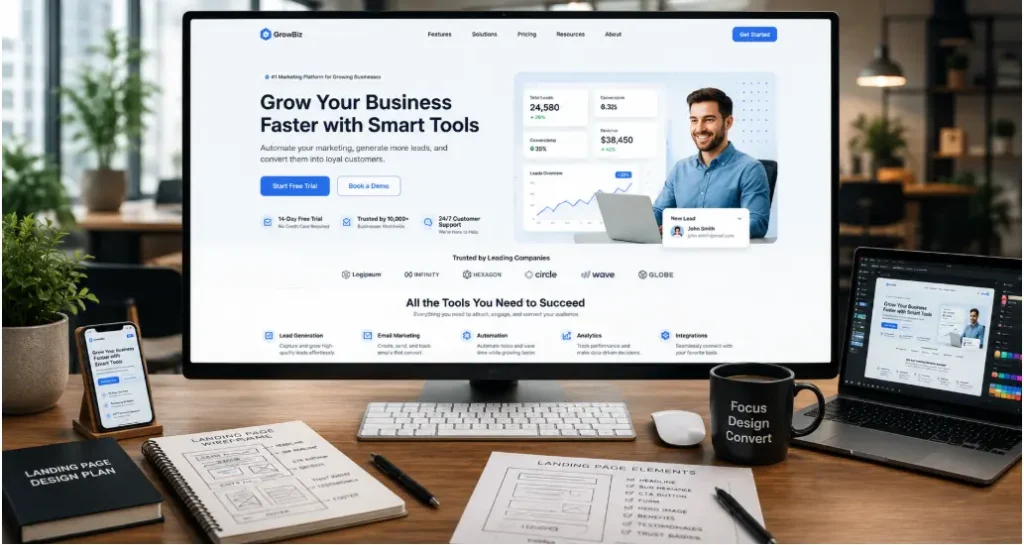
A landing page is a standalone web page created for a specific marketing campaign or business goal. Visitors usually arrive on a landing page after clicking a Google Ad, social media advertisement, email campaign, search result, or call-to-action button. Unlike a regular website page, a landing page is designed with one clear objective, such as generating leads, collecting enquiries, promoting a service, or increasing product sales.
An effective landing page design focuses on guiding visitors toward a single action without unnecessary distractions. It combines a clear headline, compelling content, engaging visuals, trust signals, and a strong call-to-action to improve conversion rates. Businesses investing in SEO Services can also use optimized landing pages to attract organic traffic while converting more visitors into customers.
Difference Between a Homepage and a Landing Page
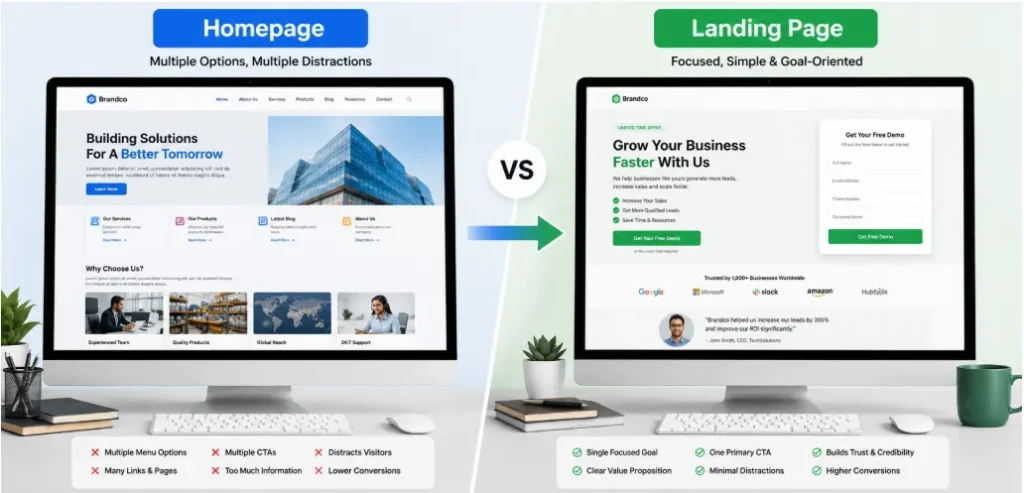
Although they may look similar, a homepage and a landing page serve different purposes. A homepage introduces your business, products, and services while allowing visitors to browse different sections of your website. In contrast, a landing page is designed with a single goal, such as generating leads, promoting a service, or increasing sales through one focused call-to-action.
A homepage contains multiple navigation links and information, whereas a landing page removes unnecessary distractions to keep visitors focused on one action. Businesses using Conversion Rate Optimization (CRO) Services often create dedicated landing pages to improve conversions from advertising and organic traffic.
Types of Landing Pages That Drive More Conversions
Different business goals require different types of landing pages. Here are four of the most effective landing page types.
1. Lead Generation Landing Page
A lead generation landing page collects visitor information such as name, email address, phone number, or company details in exchange for a free consultation, ebook, demo, quote, or other valuable resource. This type is widely used for service-based businesses and B2B marketing.
2. Video Landing Page
A video landing page uses a short, engaging video to explain a product, service, or offer. Videos help visitors understand information quickly, increase engagement, and improve conversion rates when combined with a clear call-to-action.
3. Product Landing Page
A product landing page focuses on promoting a specific product or service. It includes product images, key features, benefits, pricing, customer reviews, and a strong call-to-action to encourage purchases or enquiries.
4. Long-Form Sales Landing Page
A long-form sales landing page provides detailed information through benefits, case studies, testimonials, FAQs, and trust signals. This type works well for high-value products or services where customers need more information before making a decision. Businesses running paid campaigns through Google Ads Management Services often use long-form landing pages to improve lead quality and conversions.
The Anatomy of a Perfect Landing Page Design
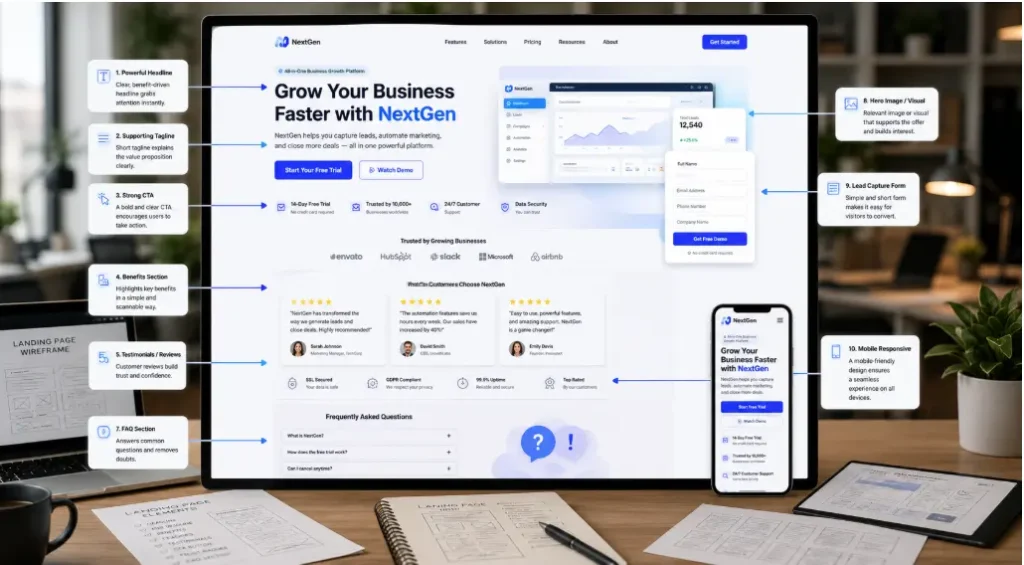
No matter which type of landing page you choose, certain elements consistently improve user engagement and conversion rates. A well-structured landing page should guide visitors toward one clear action without distractions. Here are the key elements of a high-converting landing page design.
1. Write a Powerful Headline
Your headline is the first thing visitors notice. It should clearly explain your offer, highlight the main benefit, and encourage users to continue reading.
2. Add a Clear Supporting Tagline
A short tagline should support your headline by explaining your value proposition in simple and direct language. It should answer why visitors should choose your business.
3. Create Persuasive and Error-Free Content
Your landing page copy should focus on customer benefits rather than features. Keep the content easy to read, free from grammatical errors, and aligned with your audience’s needs. Businesses using Content Marketing Services often achieve better conversions with professionally written landing page copy.
4. Display Customer Reviews and Testimonials
Trust signals such as customer testimonials, ratings, reviews, and success stories help visitors feel confident before taking action.
5. Use a Strong Call-to-Action (CTA)
Your CTA button should be easy to find and use action-oriented text like Get a Free Quote, Book a Demo, or Start Your Project. Keep the CTA visible throughout the page.
6. Choose Easy-to-Read Fonts
Use clean, readable fonts with proper spacing and font sizes. Simple typography improves readability across desktop and mobile devices.
7. Be Honest and Specific
Avoid exaggerated claims or generic messaging. Clearly explain what you offer and how it solves your customer’s problem to build trust.
8. Add High-Quality Images or Videos
Use professional images or videos that support your message and showcase your product, service, or brand. Visual content should improve understanding without slowing down the page.
9. Keep Navigation Simple
Remove unnecessary links and menu options that may distract visitors. A focused landing page keeps users moving toward your primary conversion goal.
10. Use a Consistent Color Scheme
Choose colors that match your brand identity and create enough contrast for important elements like CTA buttons. A clean, consistent design improves the overall user experience.
11. Test and Improve Regularly
Monitor landing page performance and run A/B tests to compare headlines, images, CTA buttons, layouts, and forms. Continuous testing helps improve conversion rates over time.
Wrapping Up
A successful landing page is more than an attractive design. It combines a clear message, compelling content, trust-building elements, and a strong call-to-action to convert visitors into customers. By continuously testing and improving your landing pages, you can generate more leads, increase sales, and maximize the results of your marketing campaigns. Businesses that invest in professionally designed landing pages often see better conversion rates and stronger long-term marketing performance.
Frequently Asked Questions
1. What is a landing page?
A landing page is a standalone web page created for a specific marketing campaign. Its main purpose is to encourage visitors to take one action, such as submitting a form, booking a service, or making a purchase.
2. How is a landing page different from a homepage?
A homepage introduces your business and offers multiple navigation options, while a landing page focuses on a single goal with a clear call-to-action to improve conversions.
3. What are the main types of landing pages?
The most common types include lead generation landing pages, video landing pages, product landing pages, and long-form sales landing pages.
4. What makes a landing page convert better?
A strong headline, clear value proposition, persuasive content, customer testimonials, fast loading speed, and a visible CTA button are the key elements of a high-converting landing page.
5. Why is A/B testing important for landing pages?
A/B testing helps compare different versions of headlines, images, CTA buttons, and layouts to identify which version generates more leads and conversions.
6. What should be included in landing page content?
Your landing page should include a compelling headline, clear benefits, trust signals, customer reviews, high-quality visuals, and a strong call-to-action that encourages visitors to take the next step.
7. How important is the CTA button on a landing page?
The CTA button is one of the most important elements because it directs visitors toward your desired action, such as requesting a quote, booking a consultation, or making a purchase.
8. Should I use images or videos on my landing page?
Yes. Professional images and short videos make your landing page more engaging, improve user experience, and help visitors understand your offer more quickly.
9. How can I improve my landing page conversion rate?
You can improve conversions by writing better headlines, reducing distractions, optimizing page speed, adding trust signals, simplifying forms, and testing different page elements regularly.
10. Why should businesses invest in professional landing page design?
A professionally designed landing page improves user experience, increases conversion rates, supports SEO and paid advertising campaigns, and helps generate more qualified leads and sales.