
An organization’s ability to attract and retain skilled professionals depends on much more than salary alone. Employees now evaluate career growth, workplace culture, flexibility, recognition, and overall experience before accepting a job offer. This is where an Employee Value Proposition (EVP) becomes one of the most valuable parts of an employer branding strategy.
A well-designed Employee Value Proposition helps organizations differentiate themselves in a competitive hiring market while improving employee engagement and long-term retention. Businesses that clearly communicate what employees receive in return for their skills, experience, and commitment are more likely to attract qualified candidates and build stronger teams.
This guide explains the Employee Value Proposition meaning, its framework, and practical ways to create an EVP that supports both business goals and employee expectations.
Introduction
An Employee Value Proposition (EVP) is no longer just an HR initiative—it has become an important part of recruitment, employer branding, and employee retention strategies. Organizations with a strong EVP often experience better hiring outcomes, increased employee satisfaction, and lower turnover because candidates understand the value of working with the company before joining.
Many businesses already have elements of an EVP without formally defining it. Competitive salaries, employee recognition programs, flexible work policies, career development opportunities, wellness initiatives, and positive workplace culture all contribute to an organization’s Employee Value Proposition. When these elements are communicated consistently across career pages, recruitment campaigns, and employer branding initiatives, they create a stronger connection with both current employees and future talent.
As hiring trends continue to evolve, companies are placing greater emphasis on employee experience, skills development, workplace flexibility, and purpose-driven culture. Organizations that regularly review and strengthen their EVP are better positioned to compete for top talent in an increasingly competitive job market. Businesses working with an experienced Digital Marketing Agency can also strengthen their employer branding strategy by promoting their EVP across websites, social media platforms, and recruitment campaigns, helping them reach qualified candidates more effectively.
What Is an Employee Value Proposition?
An Employee Value Proposition is the complete package of benefits, opportunities, and workplace experiences an organization offers employees in exchange for their knowledge, skills, performance, and commitment. It represents everything that makes an organization an attractive place to build a career.
A strong EVP extends beyond financial compensation. While salary remains important, employees also consider career advancement, leadership support, work-life balance, company culture, learning opportunities, employee wellbeing, flexibility, recognition, and organizational values before accepting or remaining in a position.
An effective Employee Value Proposition helps organizations:
- Attract qualified candidates.
- Improve employee retention.
- Strengthen employer branding.
- Increase employee engagement.
- Build long-term workforce loyalty.
An EVP combines tangible benefits such as salary, bonuses, insurance, and retirement plans with intangible factors including workplace culture, leadership quality, collaboration, recognition, and career progression. Some organizations communicate their EVP through dedicated career pages, employee testimonials, recruitment videos, or employer branding campaigns, while others reinforce it through consistent employee experiences and company values.
Ultimately, an Employee Value Proposition serves as the organization’s promise to employees, creating a shared understanding of what individuals can expect throughout their professional journey.
Employee Value Proposition Framework
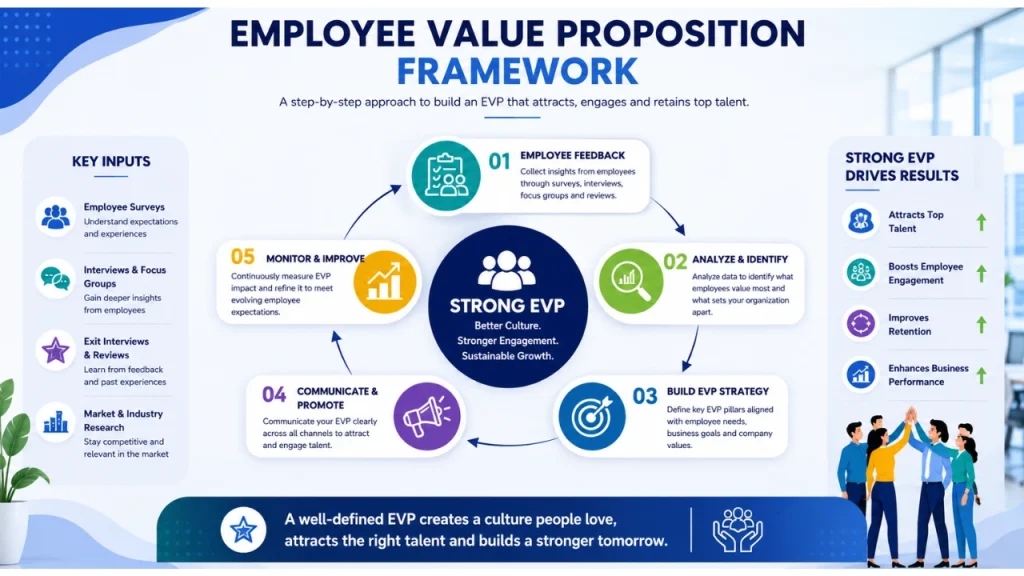
A successful Employee Value Proposition Framework is built on real employee experiences rather than marketing messages alone. Every organization already has an EVP, but defining and communicating it effectively requires structured planning and collaboration across multiple departments.
1. Identify Employee Expectations and Informal Strengths
The first step is understanding what employees genuinely appreciate about working within the organization. Collect insights through employee surveys, engagement programs, exit interviews, performance discussions, online employer reviews, and team workshops.
Employees may value different aspects of the workplace, including:
- Career growth opportunities.
- Flexible working arrangements.
- Recognition programs.
- Leadership support.
- Inclusive workplace culture.
- Learning and development initiatives.
- Employee wellbeing programs.
Group these insights into key themes to identify the strongest elements of your existing Employee Value Proposition.
2. Evaluate Existing Employee Benefits
Many organizations provide valuable employee programs that are not consistently communicated during recruitment. Work closely with HR leaders, department managers, and recruitment teams to identify both formal and informal benefits currently available.
Examples include:
- Employee recognition programs.
- Performance incentives.
- Professional certification support.
- Internal training opportunities.
- Wellness initiatives.
- Team-building activities.
- Flexible work policies.
- Career mentoring programs.
Documenting these benefits creates a clearer picture of the organization’s overall EVP.
3. Build and Communicate Your Employee Value Proposition
After identifying employee priorities and organizational strengths, package the Employee Value Proposition into messaging that reflects both company culture and candidate expectations.
When preparing your EVP, consider:
- The type of professionals you want to attract.
- Your organization’s communication style.
- Recruitment channels being used.
- Internal communication strategy.
- Employer branding objectives.
A consistent EVP should appear across career pages, recruitment campaigns, social media, employee communications, onboarding materials, and employer branding initiatives. Clear communication strengthens credibility and improves candidate engagement throughout the hiring process.
4. Align Leadership and Business Stakeholders
An Employee Value Proposition should accurately reflect the actual employee experience. Before publishing or promoting your EVP, ensure it is supported by Human Resources, Marketing, Leadership, and department managers.
Every promise included within the EVP should match workplace reality. Organizations that align leadership, company culture, and employee experience create stronger trust among both current employees and future candidates. Regular reviews also help ensure the EVP continues supporting changing workforce expectations, business goals, and recruitment strategies over time.
10 Employee Value Proposition Examples from Leading Companies
One of the best ways to build a strong Employee Value Proposition (EVP) is by studying organizations that consistently attract and retain top talent. Leading global companies have developed unique EVP strategies that combine competitive benefits, career development, workplace culture, flexibility, and employee wellbeing to create memorable employee experiences.
The following Employee Value Proposition examples demonstrate how successful organizations communicate their employer brand while supporting employee growth and long-term engagement.
1. Deloitte Employee Value Proposition
Deloitte focuses on creating meaningful careers by encouraging employees to make a real business and social impact. Its employer branding emphasizes collaboration, inclusion, innovation, leadership development, and continuous learning.
Instead of simply promoting job opportunities, Deloitte highlights how employees can contribute to challenging projects, work with experienced professionals, and grow throughout their careers. Employee stories, workplace culture videos, and career development resources help candidates understand the company’s working environment before applying.
2. Google Employee Value Proposition
Google is widely recognized for creating an employee experience that extends far beyond salary. Its Employee Value Proposition combines financial rewards, wellbeing initiatives, learning opportunities, and workplace flexibility to support both personal and professional growth.
Some of Google’s key employee benefits include:
- Competitive compensation and retirement planning.
- Comprehensive parental support programs.
- Health and wellness facilities.
- Flexible work arrangements.
- Learning and professional development opportunities.
- Financial planning assistance.
- Volunteer and community contribution programs.
Google demonstrates that an effective EVP focuses on employee wellbeing while creating opportunities for continuous career development.
3. LinkedIn Employee Value Proposition
LinkedIn promotes its workplace culture through employee storytelling and social engagement. The company’s well-known employer branding initiative encourages employees to share authentic workplace experiences, helping candidates gain genuine insights into organizational culture.
Its Employee Value Proposition includes benefits across multiple categories such as:
- Employee health and wellness.
- Family support programs.
- Professional development.
- Childcare and eldercare assistance.
- Tuition reimbursement.
- Insurance benefits.
- Paid company shutdown periods.
By combining strong employee benefits with transparent communication, LinkedIn creates a workplace that supports employees both personally and professionally.
4. Unilever Employee Value Proposition
Unilever integrates its Employee Value Proposition directly into recruitment content by clearly communicating what employees receive in return for joining the organization. Career opportunities, workplace flexibility, diversity, sustainability, and employee wellbeing are presented alongside every recruitment initiative.
This transparent communication allows potential candidates to evaluate both the role and the overall employee experience before applying.
5. Netflix Employee Value Proposition
Netflix focuses on giving employees responsibility, freedom, and opportunities to make meaningful contributions. Rather than emphasizing workplace perks alone, the company highlights professional growth, ownership, and organizational impact.
Its Employee Value Proposition commonly includes:
- Career development opportunities.
- Inclusive workplace culture.
- Competitive employee benefits.
- Transparent compensation.
- Meaningful work with measurable business impact.
Netflix demonstrates how organizational trust and employee responsibility can become powerful parts of an EVP.
6. Apple Employee Value Proposition
Apple’s employer branding focuses on innovation, creativity, and individual contribution. The company encourages employees to solve meaningful challenges while working alongside talented professionals from diverse backgrounds.
Its Employee Value Proposition emphasizes:
- Innovation-driven work culture.
- Collaboration across global teams.
- Career growth opportunities.
- Diversity and inclusion.
- Individual contribution to meaningful products.
Apple positions its employees as contributors to products that influence millions of users worldwide, making purpose an important part of its EVP.
7. Canva Employee Value Proposition
Canva has built its Employee Value Proposition around collaboration, creativity, and employee wellbeing. Employees are encouraged to contribute to products used by millions of people while enjoying an inclusive and supportive workplace.
Along with career opportunities, Canva provides benefits such as:
- Free meals and refreshments.
- Health and fitness support.
- Professional development opportunities.
- Team activities.
- Relocation assistance.
- Flexible workplace initiatives.
Its EVP successfully combines business growth with employee satisfaction and work-life balance.
8. Nike Employee Value Proposition
Nike promotes teamwork, innovation, and personal development through its employer branding strategy. The company’s Employee Value Proposition reflects its commitment to helping employees grow while contributing to products that shape the future of sports.
Employee benefits typically include:
- Competitive compensation.
- Retirement planning.
- Fitness and wellness programs.
- Learning and leadership development.
- Relocation support.
- Collaborative team culture.
Nike reinforces the idea that innovation is achieved through strong collaboration and continuous improvement.
9. Airbnb Employee Value Proposition
Airbnb aligns its Employee Value Proposition with its mission of creating belonging and meaningful connections. Employees are encouraged to contribute to an inclusive culture built around creativity, trust, collaboration, and customer experience.
The company’s EVP also includes employee-focused benefits such as:
- Travel credits.
- Paid volunteer opportunities.
- Flexible working arrangements.
- Inclusive workplace culture.
- Employee wellbeing initiatives.
This combination strengthens both employee engagement and employer branding.
10. Merck Employee Value Proposition
Merck has developed an Employee Value Proposition centered on flexibility, employee wellbeing, career continuity, and recognition. The organization offers programs that support employees throughout different stages of their professional and personal lives.
Some of its employee initiatives include:
- Paid parental leave.
- Flexible working models.
- Employee recognition programs.
- Career returnship opportunities.
- Remote and hybrid work options.
- Professional development support.
Merck demonstrates how organizations can strengthen employee loyalty by supporting long-term career growth while providing flexibility for changing life priorities.
These Employee Value Proposition examples show that successful organizations do more than offer competitive salaries. They create meaningful employee experiences through career development, workplace culture, flexibility, recognition, wellbeing, and clear communication. Businesses looking to strengthen their employer branding can adapt these strategies to build an EVP that reflects their own values while attracting and retaining high-quality talent. An experienced Employer Branding and Content Marketing strategy can further amplify these efforts by communicating the organization’s EVP consistently across career pages, social media, recruitment campaigns, and other digital channels.
Employee Value Proposition Components
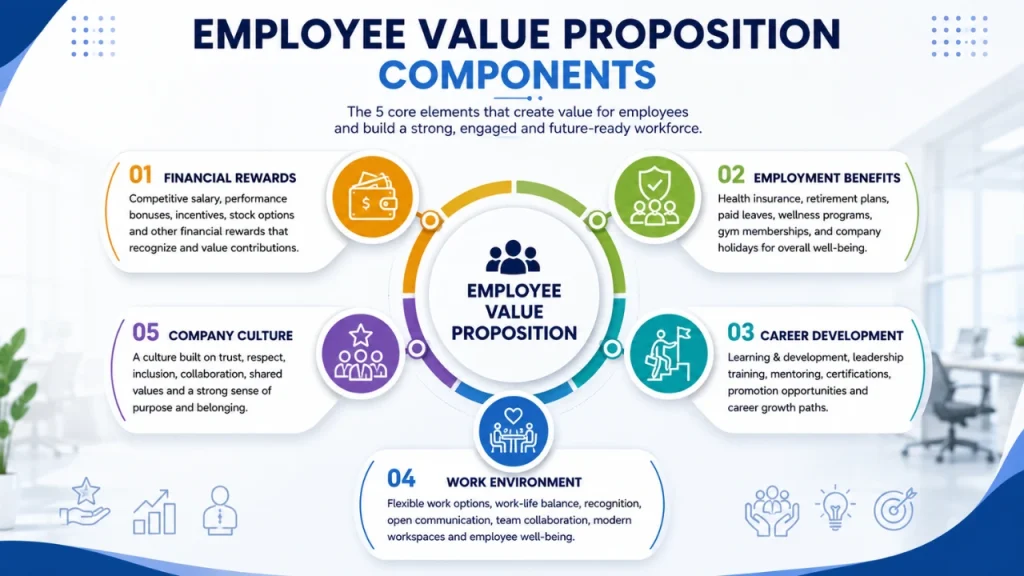
Building a strong Employee Value Proposition (EVP) starts with understanding what makes your organization a rewarding place to work. Every successful EVP is based on a combination of benefits, career opportunities, workplace culture, and employee experiences. These elements work together to attract skilled professionals and encourage them to stay with the company. A complete Employee Value Proposition should include the following five core components.
1. Financial Rewards
Financial rewards are one of the most visible parts of an Employee Value Proposition. They include everything employees receive as part of their compensation package, such as salaries, performance bonuses, incentives, profit sharing, and stock options where applicable. Although competitive pay is important, it is only one part of a successful EVP. Employees also evaluate the overall value an organization offers beyond financial compensation.
2. Employment Benefits
Employee benefits strengthen an EVP by supporting both personal and professional wellbeing. Common employment benefits include:
- Health insurance
- Retirement plans
- Paid leave
- Gym or wellness memberships
- Company-sponsored holidays
The most effective benefit programs are designed according to the organization’s industry, workforce, business goals, and employee expectations rather than using a one-size-fits-all approach.
3. Career Development
Career growth remains one of the strongest reasons employees choose to join and stay with an organization. A strong Employee Value Proposition should clearly communicate available development opportunities, including:
- Technical training
- Leadership development
- Sponsored certifications or courses
- Mentoring and career guidance
- Promotion opportunities
- Opportunities to work across locations
- Cross-functional career options
- Participation in strategic business projects
A well-defined career progression plan helps organizations attract ambitious professionals while improving long-term employee retention.
4. Work Environment
The work environment plays an important role in employee satisfaction and engagement. This component of an Employee Value Proposition includes factors such as:
- Flexible working hours
- Work-life balance
- Employee recognition
- Team-building activities
- Open communication
- Modern workplace design
- Employee wellbeing initiatives
Organizations that invest in creating a supportive, collaborative, and healthy work environment encourage employees to perform at their best while strengthening overall engagement.
5. Company Culture
Company culture reflects the values and behaviors employees experience every day. A positive workplace culture generally includes:
- Trust and collaboration
- Strong relationships among team members
- Open communication and support
- Shared commitment to organizational goals
When employees feel connected to the company’s values and mission, they are more likely to remain engaged and contribute to long-term business success.
Importance of Employee Value Proposition
An Employee Value Proposition is much more than a recruitment message. It helps organizations improve employee retention, strengthen employer branding, create better workplace experiences, and reduce hiring costs. Companies with a well-defined EVP are often better positioned to attract qualified professionals while maintaining a motivated workforce.
Salary alone is no longer the deciding factor for many job seekers. Flexible work options, health benefits, career growth, family-friendly policies, and employee wellbeing have become equally important when evaluating employment opportunities. Organizations that balance financial rewards with meaningful employee experiences often build stronger relationships with both current and future employees.
A strong EVP also supports diversity and inclusion by creating an environment where people from different backgrounds feel valued and respected. This contributes to greater innovation, stronger collaboration, and improved business performance over time.
Employee Value Proposition Benefits
Creating a unique Employee Value Proposition gives organizations a competitive advantage when attracting, hiring, and retaining talented professionals. It also strengthens employer branding and improves overall workforce management.
1. Attracting Top Talent
Today’s professionals carefully evaluate employers before accepting job offers. Flexible work options, career growth, company culture, and employee experience often influence their decisions as much as salary. A clearly communicated Employee Value Proposition helps organizations stand out in a competitive hiring market while attracting qualified candidates.
2. Retaining Top Talent
Hiring skilled employees is only part of the challenge. Retaining experienced professionals is equally important because replacing valuable employees requires significant time, effort, and recruitment costs. A strong EVP increases employee satisfaction and encourages long-term commitment to the organization.
3. Reducing Recruitment Costs
Organizations with a compelling Employee Value Proposition generally receive more applications from qualified candidates. This reduces spending on recruitment agencies, job advertisements, and hiring campaigns. Better employee retention also lowers onboarding and training costs by decreasing frequent hiring requirements.
4. Building a Strong Company Culture
Employees become more engaged when they understand the organization’s values and believe their personal goals align with the company’s mission. A well-developed Employee Value Proposition strengthens workplace culture by encouraging collaboration, trust, and shared purpose.
5. Improving the Employee Experience
A successful Employee Value Proposition shapes every stage of the employee journey, from recruitment and onboarding to career development and long-term retention. Organizations that regularly evaluate employee needs and adapt their EVP create a better workplace experience, resulting in higher engagement, stronger productivity, and improved business performance.
What Makes a Good Employee Value Proposition?
A strong Employee Value Proposition (EVP) helps your organization stand out in a competitive hiring market while meeting the expectations of current and future employees. It should reflect your company’s values, workplace culture, and long-term vision, making employees feel valued, motivated, and connected to the organization. A successful EVP goes beyond salary by offering a complete employee experience. The following elements are commonly found in an effective Employee Value Proposition:
- Competitive salaries, performance bonuses, incentives, and stock options.
- Employee benefits such as paid leave, health insurance, retirement plans, parental leave, and company-sponsored holidays.
- Career development opportunities including leadership training, technical certifications, mentoring programs, promotions, tuition assistance, and opportunities to work across locations or departments.
- Additional financial and non-financial benefits such as wellness programs, flexible working hours, remote work options, employee recognition initiatives, refreshments, and team-building activities.
- A positive work environment that promotes flexibility, work-life balance, employee wellbeing, recognition, and individual growth.
- A strong company culture built on communication, collaboration, shared values, trust, and meaningful relationships across teams.
How to Create an Employee Value Proposition?

Creating a successful Employee Value Proposition becomes much easier once you understand the key components that employees value most. The following steps can help organizations build an EVP that attracts and retains top talent.
1. Assess Your Current Employee Offerings
Start by evaluating your existing employee experience. Review your compensation, benefits, workplace culture, career development opportunities, and employer branding. Compare each area against your business goals and employee expectations. Collect honest feedback from employees to understand where your organization performs well and where improvements are needed.
2. Gather Feedback from Current and Former Employees
Building a meaningful EVP requires understanding employee experiences. Conduct employee surveys, focus group discussions, one-on-one interviews, and exit interviews to identify what employees value most. Former employees can also provide useful insights into areas that influenced their decision to leave. This information helps organizations create an Employee Value Proposition based on real employee expectations.
3. Define the Core Elements of Your EVP
Review the feedback collected and identify the strengths that make your organization different. Group your Employee Value Proposition into clear themes that reflect various employee roles, career stages, and business functions. Once these strengths are identified, convert them into simple and meaningful messages that potential candidates can easily understand.
4. Write a Clear Employee Value Proposition Statement
The next step is creating an EVP statement that communicates what makes your organization a great place to work. Keep the message concise, authentic, and aligned with your company values. A well-written Employee Value Proposition should accurately represent the employee experience while supporting your recruitment and employer branding strategy.
5. Promote Your Employee Value Proposition
An Employee Value Proposition only creates value when employees and candidates can easily see it. Share your EVP across career pages, company websites, recruitment campaigns, LinkedIn, employee referral programs, social media platforms, newsletters, internal communication channels, and recruitment videos. Consistent communication strengthens employer branding and improves talent attraction.
6. Review and Improve Your EVP Regularly
Employee expectations continue to change over time, making regular EVP reviews essential. Monitor employee feedback, application trends, candidate engagement, social media interactions, and employee retention to evaluate performance. Reviewing your Employee Value Proposition at least once each year helps ensure it remains relevant and competitive.
How to Measure an Employee Value Proposition?
The effectiveness of an Employee Value Proposition can be measured using several recruitment, engagement, and retention metrics. The following KPIs provide a clear picture of how well your EVP supports employer branding and talent acquisition.
1. Job Offer Acceptance Rate
A strong Employee Value Proposition generally increases the percentage of candidates accepting job offers. If acceptance rates remain low, it may indicate weaknesses in the recruitment process, candidate experience, or employer branding. Collecting candidate feedback helps identify improvement opportunities.
2. Time-to-Hire
Organizations with a well-established employer brand often fill vacancies more quickly because candidates already understand the company’s reputation and workplace culture. Tracking time-to-hire helps identify recruitment bottlenecks and evaluate EVP effectiveness.
3. Quality of Hire
Quality of hire measures how successfully new employees contribute to business performance after joining the organization. A strong Employee Value Proposition attracts qualified professionals who remain engaged, perform well, and support long-term business growth.
4. Hiring Manager Satisfaction
Hiring managers play an important role in evaluating recruitment quality. Their feedback helps determine whether new employees meet business expectations and whether the recruitment process successfully attracts suitable candidates. Low satisfaction may indicate that the EVP or hiring strategy requires improvement.
5. Employee Referrals
Employee referrals are one of the strongest indicators of a successful employer brand. When employees willingly recommend their organization to friends and professional contacts, it reflects confidence in the workplace and strengthens future recruitment efforts.
6. Employee Engagement Rate
A successful Employee Value Proposition should improve employee engagement over time. Regular employee surveys, participation in workplace initiatives, and involvement in employer branding activities provide useful insights into how employees perceive the organization.
7. New Hire Retention Rate
Monitoring how long new employees remain with the organization helps evaluate whether the Employee Value Proposition matches actual workplace experiences. High retention indicates stronger employee satisfaction, while frequent early resignations suggest gaps between recruitment messaging and reality.
8. Win/Loss Ratio Against Competitors
Comparing the number of candidates your organization hires versus those joining competing employers helps measure employer brand strength. A favorable win/loss ratio indicates that your Employee Value Proposition is successfully attracting quality talent.
9. Employer Awards and Industry Recognition
Recognition through workplace awards and employer rankings strengthens employer credibility. Even participating in these programs helps organizations benchmark their Employee Value Proposition, identify improvement opportunities, and build greater trust among potential candidates.
What Is the Difference Between Employee Value Proposition and Employer Brand?
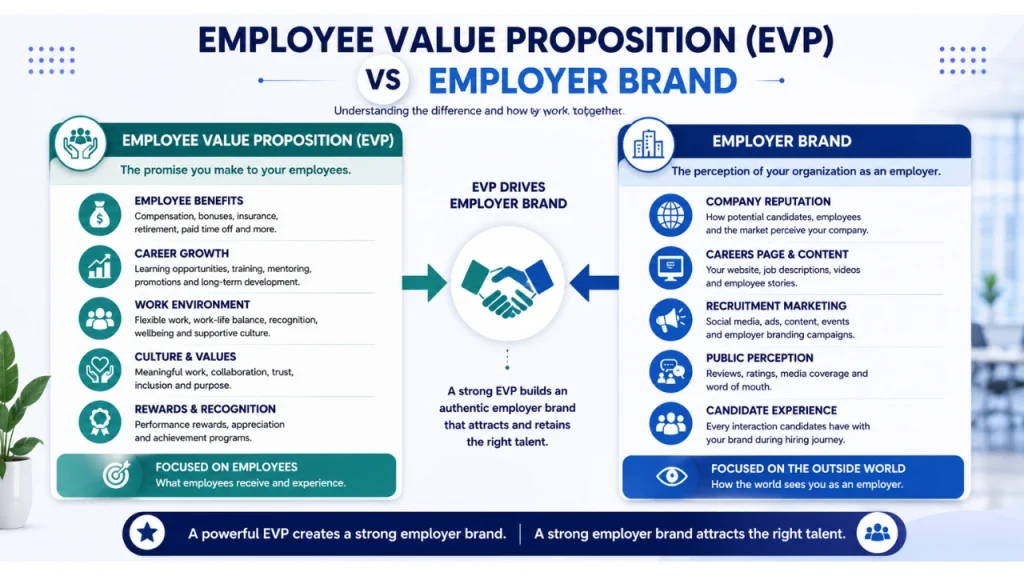
Although Employee Value Proposition (EVP) and Employer Brand are closely connected, they serve different purposes. An Employer Brand is the public image of your organization as a workplace. It reflects how job seekers, employees, and the market perceive your company. It is shaped through your careers page, recruitment campaigns, social media presence, employee reviews, and overall company reputation.
An Employee Value Proposition, on the other hand, is the promise your organization makes to its employees. It includes both tangible benefits, such as salary and rewards, and intangible benefits, such as career growth, workplace culture, flexibility, recognition, and employee experience. A strong EVP is created by understanding employee expectations through surveys, interviews, focus groups, and regular feedback.
Simply put, an Employer Brand communicates your company’s reputation to the outside world, while an Employee Value Proposition defines the value employees receive after joining your organization. Your EVP explains why people should work for your company, while your Employer Brand demonstrates how that promise is presented and experienced by others.
Frequently Asked Questions
How can you measure the effectiveness of an Employee Value Proposition?
The success of an Employee Value Proposition can be measured using key HR and recruitment metrics such as employee satisfaction, career page traffic, time-to-hire, application-to-interview ratio, cost-per-hire, employee retention, attrition rate, and employer review ratings. These indicators help organizations understand whether their EVP is attracting and retaining the right talent.
What is the difference between an Employee Value Proposition and Employer Brand?
An Employee Value Proposition explains the benefits, opportunities, and workplace experience employees receive in return for their skills and contributions. An Employer Brand represents how your organization is viewed by potential candidates and the public. In simple terms, the EVP forms the foundation, while the Employer Brand communicates that value externally.
What questions should an Employee Value Proposition answer?
A well-developed Employee Value Proposition should answer the questions most candidates ask before applying for a role, including:
- Why should I choose this company over another employer?
- What benefits and career opportunities will I receive?
- What makes this organization a great place to work?
- How is this company different from its competitors?
- Why should I build my career here?
Conclusion
A successful Employee Value Proposition combines both tangible and intangible benefits that improve the overall employee experience. Competitive compensation, employee benefits, workplace flexibility, career development, recognition, diversity, inclusion, and a positive company culture all contribute to building a strong EVP.