In the world of digital marketing, where competition is intense and consumer attention is fleeting, goal setting plays a vital role. Every campaign, strategy, or marketing activity should be driven by a clear and focused objective. But how do you ensure your goals are not just ideas but achievable targets?
That’s where the SMART framework comes in — a powerful method to define goals that are Specific, Measurable, Achievable, Relevant, and Time-bound. Whether you’re managing a social media campaign, launching a new product, or running SEO strategies, using SMART objectives helps align marketing efforts with business goals and ensures measurable success.
In this article, we’ll break down each component of SMART objectives and how to apply them in your digital marketing efforts, along with practical examples, actionable tips, and strategic insights.
What Are SMART Objectives?
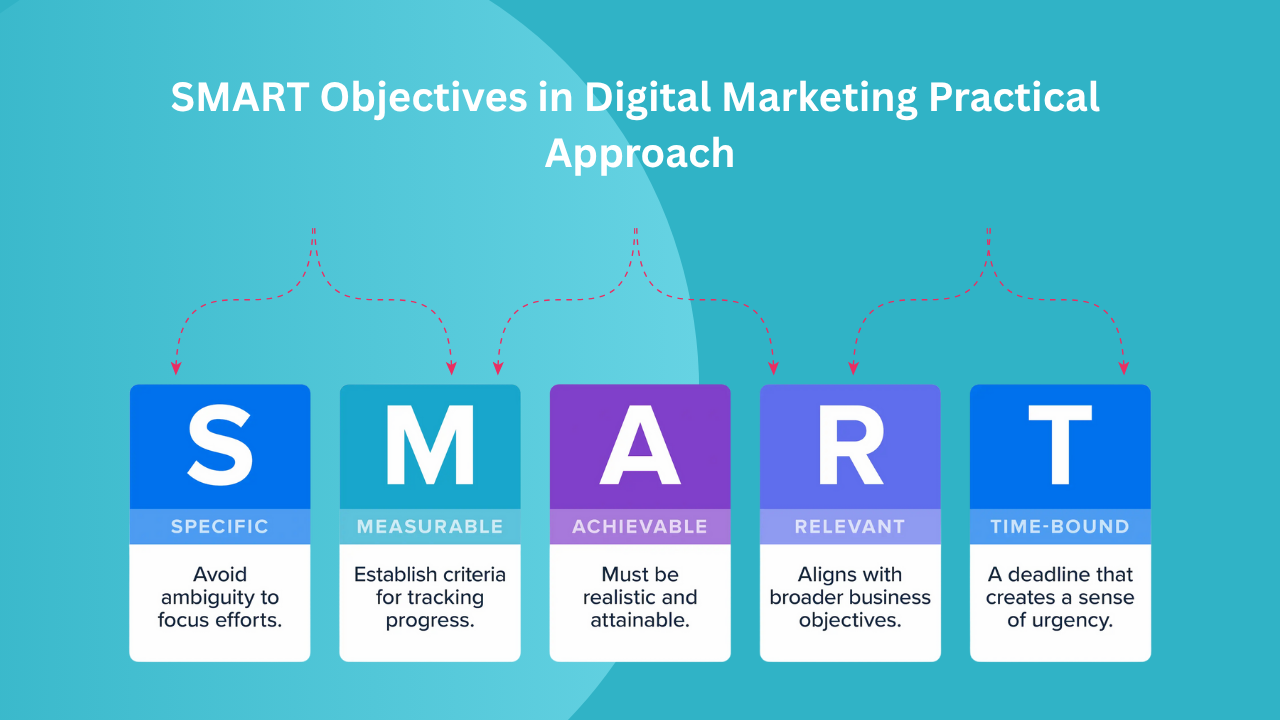
SMART is an acronym used to guide the goal-setting process. SMART objectives help marketers and businesses stay focused, plan better, and achieve real, trackable results. Each letter in SMART stands for:
- S – Specific
- M – Measurable
- A – Achievable
- R – Relevant
- T – Time-bound
Using this structure ensures that goals are well-planned, realistic, and aligned with broader business outcomes.
Why SMART Objectives Matter in Digital Marketing
In digital marketing, activities are heavily data-driven. From monitoring click-through rates and conversions to optimizing ad spend, every action must contribute to a well-defined outcome. Vague goals like “Increase website traffic” or “Get more leads” offer no direction. SMART goals, on the other hand, provide a roadmap for execution and performance evaluation.
Implementing SMART goals allows marketers to:
- Prioritize tasks effectively
- Align campaigns with business KPIs
- Measure success accurately
- Allocate budgets and resources wisely
- Improve decision-making with real-time insights
1. Specific: Defining Clear and Focused Goals
A goal must be specific to be effective. It should answer the Who, What, Why, Where, and When questions. A clearly defined goal eliminates confusion and aligns team members on a shared purpose.
How to Set Specific Goals:
- Avoid general terms like “increase sales” or “gain followers”
- Identify your target audience, platform, and product/service
- Clearly define what needs to be achieved
Vague Goal:
Increase sales of our product.
SMART Goal:
Increase sales of our organic skincare products by targeting women aged 25–35 via Instagram paid ads in Q3.
SEO Keywords to Use:
target audience marketing, product-focused strategy, digital marketing goals
2. Measurable: Track Progress and Performance
A goal is only valuable if its success can be measured. Measurable goals define what success looks like and allow marketers to analyze ROI (Return on Investment).
How to Set Measurable Goals:
- Define KPIs (Key Performance Indicators) like clicks, leads, conversions, CPC, ROI
- Set numerical targets (e.g., 10%, 500 leads, 20% increase)
- Use analytics tools to track metrics over time
Vague Goal:
Generate more website leads.
SMART Goal:
Generate 300 qualified leads through SEO landing pages within 60 days.
SEO Keywords to Use:
conversion goals, performance marketing, measurable marketing metrics
3. Achievable: Set Realistic Yet Challenging Goals
An achievable goal pushes your team while remaining realistic. Consider available resources, tools, budget, team capacity, and past performance before finalizing goals.
How to Set Achievable Goals:
- Use historical data and analytics
- Know your team’s capability and workload
- Evaluate your current marketing infrastructure and tools
Unrealistic Goal:
Get 10,000 Instagram followers in one week.
SMART Goal:
Gain 2,000 new Instagram followers organically in 60 days through consistent reels and influencer collaborations.
SEO Keywords to Use:
realistic marketing goals, achievable digital targets, campaign planning
4. Relevant: Align With Business Goals
A relevant goal supports the business’s broader vision and priorities. No matter how attractive a campaign sounds, if it doesn’t align with business needs or customer expectations, it’s not worth the effort.
How to Set Relevant Goals:
- Ask: Does this goal contribute to company growth?
- Ensure alignment with overall marketing strategy
- Prioritize value-driven and customer-focused objectives
Irrelevant Goal:
Increase Twitter engagement by 50% (when your audience is mainly on LinkedIn)
SMART Goal:
Improve LinkedIn engagement rate by 40% over 3 months to support B2B lead generation.
SEO Keywords to Use:
goal alignment, marketing relevance, digital marketing priorities
5. Time-Bound: Set Deadlines for Accountability
A time-bound goal includes a deadline or timeframe to encourage accountability and urgency. Without a timeline, campaigns may drift or stall.
How to Set Time-Bound Goals:
- Define a clear start and end date
- Use quarterly or monthly goals for better tracking
- Consider internal workflows, content calendars, and seasonal trends
Indefinite Goal:
Grow blog traffic.
SMART Goal:
Increase blog traffic by 25% by the end of Q3 using SEO-optimized content and weekly publishing.
SEO Keywords to Use:
marketing timeline, campaign deadline, performance tracking
Real-World Example SMART Objective
Let’s combine all the elements into one SMART objective:
Final SMART Goal:
“Increase email subscribers by 20% in 60 days through Facebook lead generation ads targeting users aged 20–40 interested in digital services.”
This goal is:
- Specific (email subscribers, Facebook ads, target audience)
- Measurable (20% increase)
- Achievable (based on past campaign data)
- Relevant (email subscribers lead to sales funnel entry)
- Time-bound (60 days)
Pro Tips for Implementing SMART Objectives in Digital Marketing
- Use tools like Google Analytics, Meta Ads Manager, and CRM dashboards to track measurable KPIs
- Involve stakeholders in planning to ensure goal relevance and buy-in
- Run A/B tests to optimize campaigns toward SMART targets
- Review and adjust your goals regularly based on campaign performance
- Leverage AI tools like ChatGPT for strategy development, content creation, and performance reporting
SMART Objectives: Common Digital Marketing Applications
| Marketing Channel | SMART Goal Example |
| SEO | Increase organic traffic by 30% in 3 months by optimizing 20 key pages |
| Social Media Marketing | Get 1,000 LinkedIn followers in 60 days through regular posting and engagement |
| Email Marketing | Achieve 25% open rate and 5% click-through rate on monthly newsletters within 2 months |
| PPC Campaigns | Reduce CPC by 15% while maintaining conversions in Q3 |
| Content Marketing | Publish 8 blog posts per month and gain 10 backlinks from niche websites |
Conclusion: Power of SMART Goals in Digital Strategy
At iBirds Digital, we believe that strategy without direction is just effort without results. Implementing SMART objectives in your digital marketing strategy ensures that every campaign, every piece of content, and every penny spent contributes to a measurable business outcome.
By following this framework, businesses can focus on what’s important, stay on track, and achieve long-term growth. Whether you’re a startup looking for traction or an established brand aiming to scale, SMART goals are your compass in the digital world.
Need help building SMART digital marketing strategies?
Contact iBirds Digital today and let our experts craft performance-driven campaigns tailored to your business needs.
FAQs: SMART Objectives in Digital Marketing
Q1. What are SMART objectives in digital marketing?
A: SMART objectives are Specific, Measurable, Achievable, Relevant, and Time-bound goals that help marketers create focused, data-driven strategies for digital campaigns.
Q2. Why is it important to use SMART goals in digital marketing?
A: SMART goals bring clarity and accountability to marketing efforts. They help track performance, allocate resources effectively, and align campaigns with overall business objectives.
Q3. Can you give an example of a SMART goal for social media marketing?
A: Yes. Example: “Gain 2,000 Instagram followers organically in 60 days through consistent reels and influencer collaborations.” This is specific, measurable, and time-bound.
Q4. How do SMART objectives improve ROI in digital marketing campaigns?
A: By setting measurable and relevant goals, marketers can track success metrics like conversions and click-through rates, optimizing campaigns in real time to improve ROI.
Q5. What tools can help track SMART objectives in digital campaigns?
A: Tools like Google Analytics, Meta Ads Manager, HubSpot, and CRM dashboards can help monitor KPIs, track performance, and measure goal achievement over time.
Q6. Are SMART objectives only useful for large businesses?
A: No, SMART goals are valuable for businesses of all sizes. They help startups, SMBs, and enterprises alike stay focused, organized, and result-oriented in digital marketing.
Q7. How often should SMART objectives be reviewed or updated?
A: It’s best to review SMART goals monthly or quarterly, depending on the campaign. Regular reviews allow teams to adjust strategies based on performance data.
Q8. How do I align SMART objectives with my business strategy?
A: Start by identifying your business goals (e.g., lead generation, brand awareness) and build your SMART objectives to support those priorities across your digital channels.
Q9. What are some common mistakes in setting SMART goals?
A: Common mistakes include setting vague goals, ignoring available resources, missing timelines, or creating objectives that don’t align with business outcomes.
Q10. Can SMART objectives be applied to SEO and content marketing?
A: Absolutely. For example, “Increase organic traffic by 30% in 3 months by optimizing 20 key pages” is a SMART goal for SEO. It’s measurable, relevant, and time-bound.