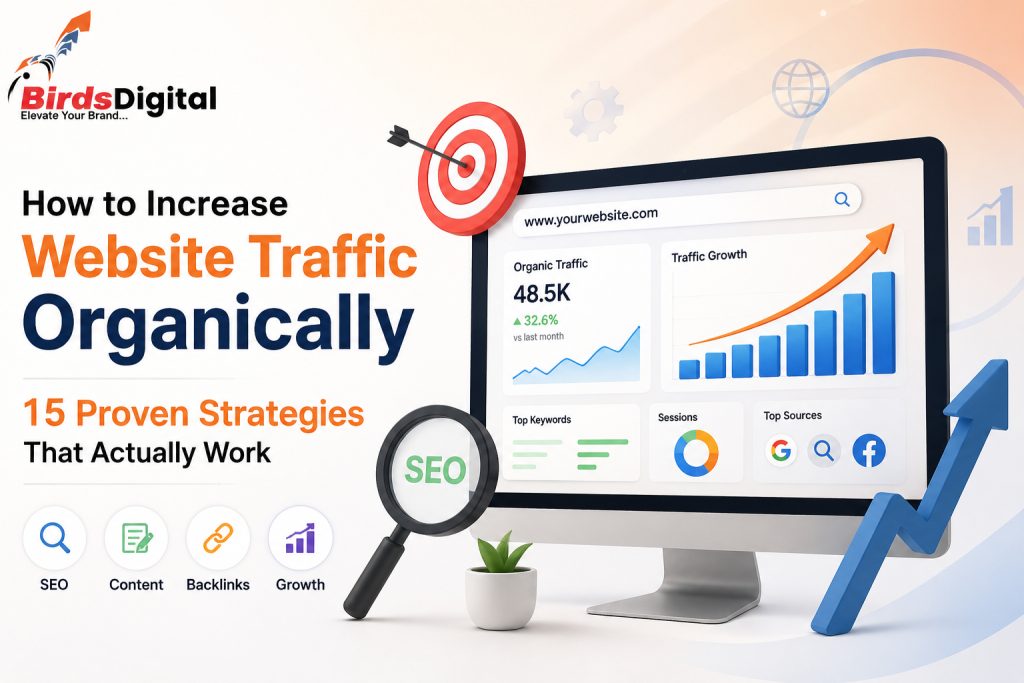

If you are struggling to get visitors to your website, you are not alone. Many business owners want to know how to increase website traffic organically without spending money on ads.
Organic traffic is one of the most powerful ways to grow your online presence. It brings real users who are already searching for your services or information. The best part is that it gives long term results.
In this guide, you will learn simple and practical ways to increase your website traffic step by step.
What is How to Increase Website Traffic Organically
How to increase website traffic organically means getting visitors from search engines like Google without using paid advertisements.
When your website ranks higher in search results, users click on your content and visit your website naturally.
For example, if someone searches for how to increase website traffic organically and your blog appears on the first page, you will get free traffic.
Why It is Important
Organic traffic is important for every website and business.
Here are the main reasons:
- It reduces marketing costs
- It builds trust and credibility
- It brings long term results
- It increases brand visibility
Unlike paid ads, organic traffic continues even after months.
Key Benefits of Organic Traffic
Long Term Growth
Once your content ranks, it keeps bringing traffic over time.
High Quality Visitors
Visitors coming from search engines are already interested in your topic.
Better Conversion Rate
Organic users are more likely to take action or become customers.
Strong Online Presence
Ranking on Google improves your authority and trust.
Step by Step Guide to Increase Website Traffic Organicall
1. Do Proper Keyword Research
Keyword research is the first step in SEO.
Focus on:
- Long tail keywords
- Low competition keywords
- User intent
Example:
how to increase website traffic organically for beginners
This type of keyword is easier to rank.
2. Create High Quality Content
Content is the backbone of organic growth.
Your content should:
- Solve user problems
- Be easy to read
- Provide clear answers
- Use the keyword naturally
Try to write content with at least 1000 words for better results.
3. Optimize On Page SEO
On page SEO helps search engines understand your content.
Important elements include:
- Title with keyword
- Meta description
- Proper headings
- Clean URL
- Image alt text
Make sure your keyword appears in the first paragraph.
4. Improve Website Speed
A slow website can reduce traffic.
Best practices:
- Keep load time under 3 seconds
- Compress images
- Use fast hosting
You can check speed using Google PageSpeed Insights.
5. Make Your Website Mobile Friendly
Most users visit websites on mobile devices.
Your website should:
- Be responsive
- Load quickly
- Have simple navigation
Google gives priority to mobile friendly websites.
6. Build Quality Backlinks
Backlinks help improve your website ranking.
Focus on:
- Guest posting
- Blog submissions
- Outreach
- Directory listings
Avoid spam backlinks because they can harm your SEO.
7. Use Internal Linking
Internal linking connects your pages and improves SEO.
Benefits:
- Helps search engines crawl your site
- Increases time on site
- Improves user experience
Link your blog pages to service pages and related articles.
8. Update Old Content
Updating content improves ranking.
You should:
- Add new information
- Update keywords
- Improve readability
- Fix outdated content
Fresh content performs better in search results.
9. Promote Content on Social Media
Social media helps increase traffic.
Share your content on:
- Quora
This improves visibility and engagement.
10. Focus on User Experience
User experience plays a major role in SEO.
Improve:
- Website design
- Navigation
- Readability
- Call to action
Better experience leads to better rankings.
11. Write Long Form Content
Long content performs better in search engines.
Best practices:
- Write 1000 to 1500 words
- Use headings
- Add examples
- Cover topics fully
This increases engagement and ranking.
12. Optimize Images
Images should be optimized for SEO.
Do this:
- Compress images
- Use proper file names
- Add alt text
Example alt text:
how to increase website traffic organically
13. Target Featured Snippets
Featured snippets appear at the top of search results.
To target them:
- Answer questions clearly
- Use bullet points
- Keep answers short
This increases clicks.
14. Use Email Marketing
Email marketing helps bring repeat visitors.
Send:
- Blog updates
- Offers
- Newsletters
This keeps users engaged.
15. Stay Consistent
Consistency is the key to success.
Focus on:
- Regular content creation
- SEO improvements
- Continuous updates
Organic growth takes time but gives long term results.
Common Mistakes to Avoid
Avoid these mistakes:
- Keyword stuffing
- Ignoring mobile users
- No internal linking
- Slow website
- Low quality content
Fixing these issues can improve your ranking faster.
Expert Tips
- Focus on user intent instead of only keywords
- Write for users first, then optimize for SEO
- Keep content simple and clear
- Track performance using analytics tools
- Update your content regularly
In 2025, search engines focus more on helpful and user friendly content.
Frequently Asked Questions
How long does it take to increase website traffic organically
It usually takes 3 to 6 months to see initial results. Strong growth can take up to 12 months.
What is the best way to increase website traffic organically
The best way is to combine SEO, content marketing, and backlinks.
Can I increase traffic without ads
Yes, organic traffic can be increased using SEO and content strategies.
How many blogs should I post
Posting 2 to 4 blogs per week helps improve traffic faster.
Is SEO important for traffic
Yes, SEO is the main factor for increasing organic traffic.
Conclusion
Now you clearly understand how to increase website traffic organically using simple and effective strategies. Focus on content quality, SEO, and user experience.
Organic traffic takes time, but it gives strong and long lasting results. If you stay consistent, your website will grow steadily.